


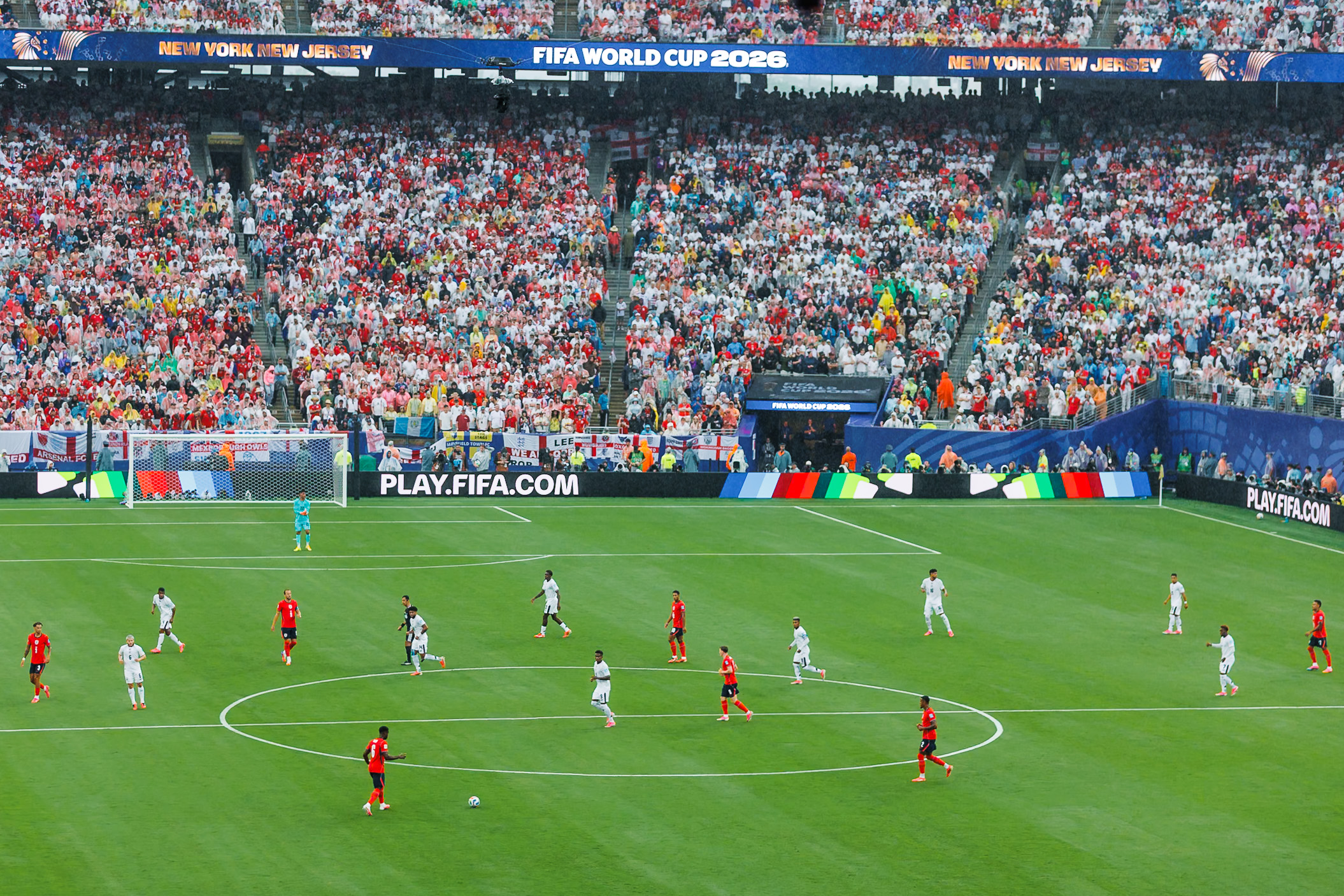
Before a single fan enters a stadium, someone has to stand in the space and figure out what it needs.
As part of TBA US’s work delivering fan experience, VVIP hospitality and brand experiences across all 16 FIFA World Cup 2026 stadiums, our team surveyed every venue on the circuit. From NFL super-stadia in Dallas, Los Angeles and New Jersey to historic football grounds in Mexico City, Guadalajara and Monterrey. Sixteen stadiums, sixteen entirely different conversations.
Here, Maria Nunez from TBA US reflects on what those visits revealed.
The logistics
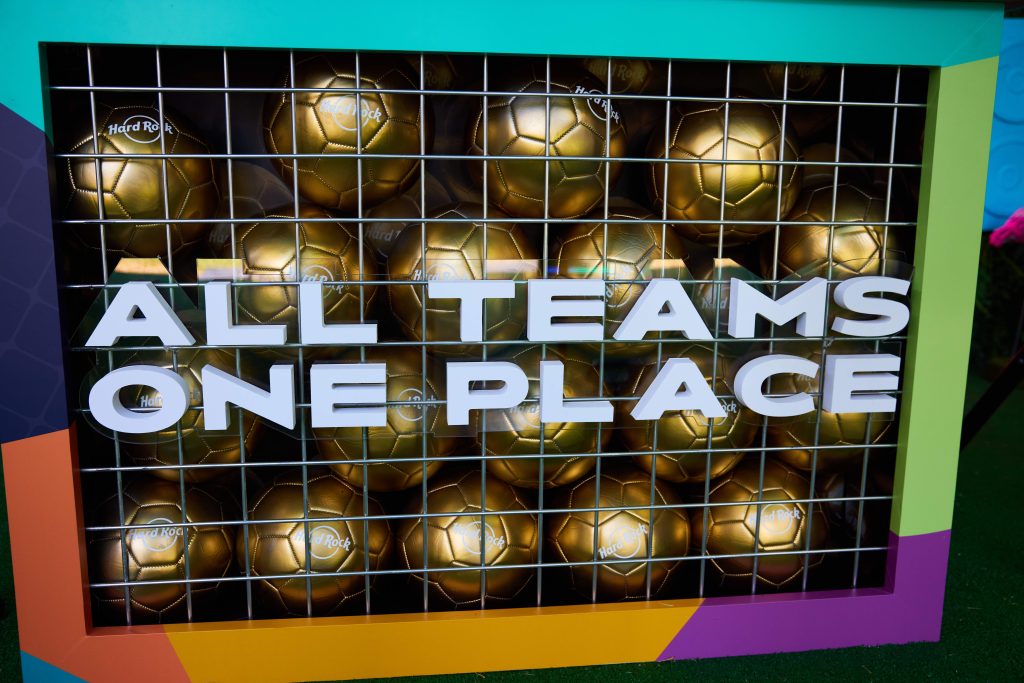
Delivering a project of this scale requires a particular kind of discipline. Multiple time zones, languages, regulatory environments and construction timelines, all running simultaneously, all interdependent. A decision made at one venue ripples across the rest. A construction delay at one site affects the design timeline for the programme that needs to be installed there.
Staying aligned, adaptable and proactive across all of it has been as important as any individual design decision made along the way.
No two venues are the same
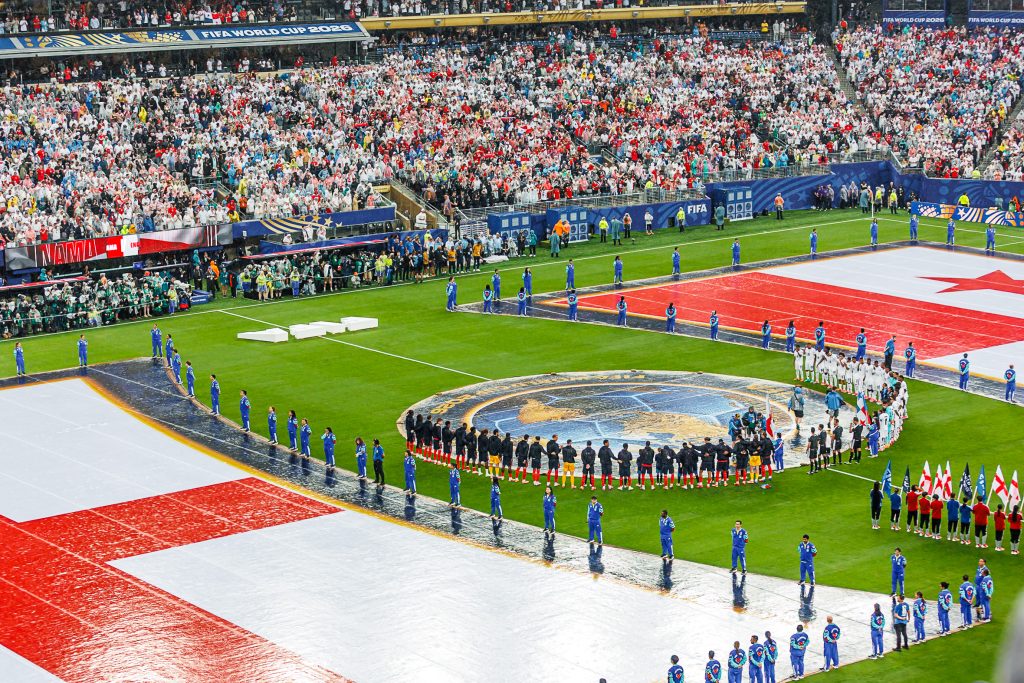
Restrictions driven by sponsorship agreements or the building’s own materials meant some stadiums had strict limitations on how graphics could be applied. Rather than scaling back, those constraints pushed the team toward better solutions: stronger furniture choices, more considered lighting, a sharper focus on the guest journey itself over surface-level visual impact.
Several venues added another layer of complexity. Namely, portions still under construction during our visits. So, designing for spaces that didn’t yet physically exist defined much of the early project work.
This meant design solutions had to be developed from CAD plans and rendering rather than finished spaces, requiring close coordination with venue teams and a high degree of flexibility throughout.
NFL stadiums vs Football grounds
One of the most illuminating aspects of the survey was experiencing both ends of the venue spectrum. NFL stadiums are extraordinary facilities; engineered for scale, commercial density and premium hospitality. But they were not designed for football.
The sightlines are different, the atmosphere architecture is different, the spatial language of every lounge and threshold space carries the identity of a different sport.
In Mexico, the venues told a completely different story. Grounds where football is the primary purpose, where the spatial relationship between crowd and pitch feels native rather than adapted. Delivering a consistent quality of hospitality experience across both typologies (without flattening the character of either) meant a single template could not be applied sixteen times. Each space required understanding a different kind of venue DNA, and respecting it.
Standing at field level in the Azteca
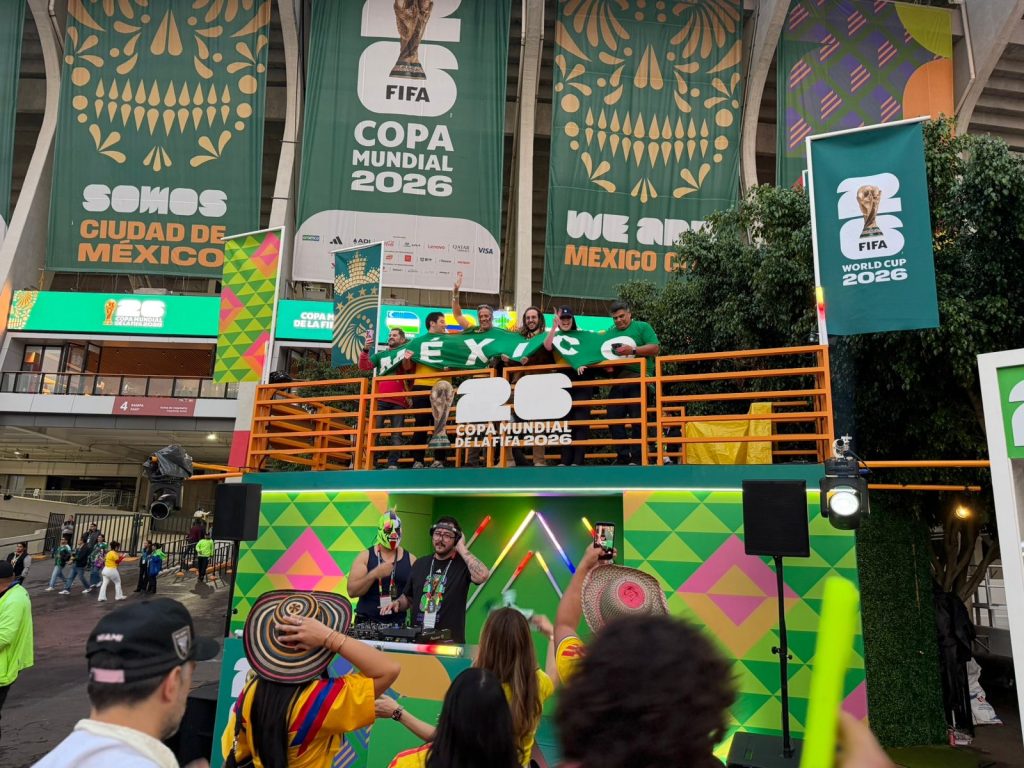
Among all the memorable visits, one stood out.
Azteca in Mexico City, mid-renovation, mid-construction chaos, is one of the most significant football grounds on earth. Two World Cup finals, Maradona’s Hand of God and Goal of the Century and Half a century as the spiritual home of Mexican football.
“Standing at field level, you could already sense the scale, history, and energy that will make it one of the defining venues of the tournament.”
The sense of a building that has held 100,000 people and is preparing to do so again, no rendering can communicate that. It’s a thing you have to stand inside to understand and understanding it changes how you approach the design work. The hospitality experiences we’ve delivered in that venue wasn’t just a commercial brief, but an act of participation in something with a great deal of accumulated meaning.
That weight it present at every venue on this circuit, to varying degree. It is more audible in some places than others, but it is always there. The feeling that football’s history is embedded in these spaces and that the experiences we build inside them should be worthy of it.
The site survey phase of a project like this one doesn’t make the headlines. It doesn’t produce content and it rarely gets talked about outside the team that does it.
But it is the foundation on which everything else is built: the intelligence that makes good design possible, the relationships between many many teams and the understanding of each venue that allows us to deliver something worthy of the moment.
That work is done. Now the tournament is speaking for itself.